Library Migration

Team

Individual design work.
Worked with 5 Amazon Music PM’s.

Role

Create E2E UX flows for mobile, mWeb, web, and desktop app.
User research and testing.

Duration

Apr 2022 - Apr 2025
Context

Customers' libraries were unusable

Amazon Music’s Add to Library interaction reflected a legacy MP3 ownership model, where adding an album automatically added every track and the associated artist. While customers expected to save a specific album for later listening, the system interpreted that action as broad ownership. Over time, this caused libraries to expand passively—filling with songs and artists customers never consciously chose. As a result, customers struggled to recognize their own collections, making libraries feel cluttered, noisy, and increasingly unusable as a source of personal meaning.

Customers relied on workarounds to access their saved music

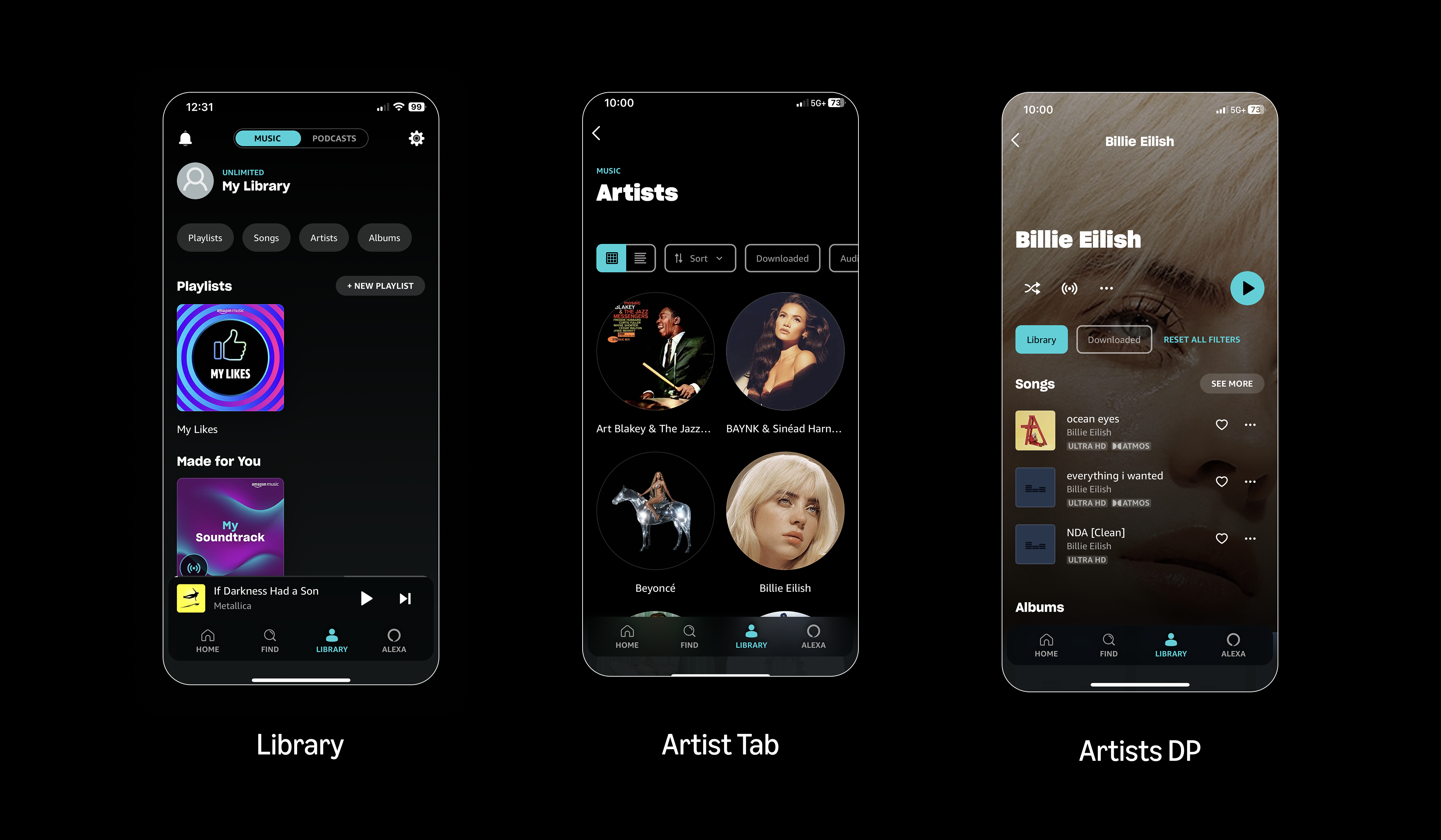
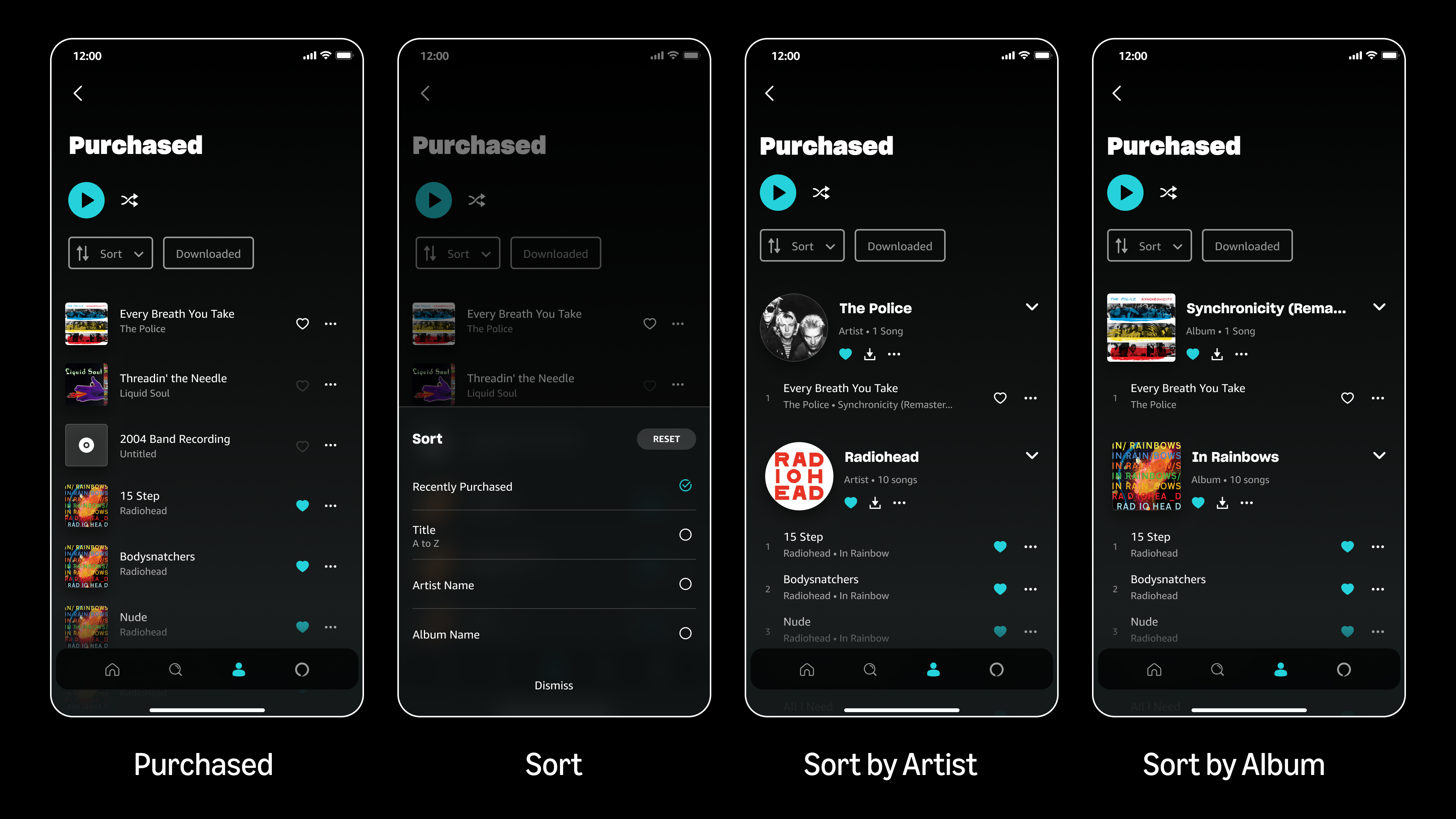
To find music in their library, customers often navigated to the Artists tab, tapped into an artist’s detail page, and then applied library-specific filters to surface saved songs or albums. Rather than browsing a collection directly, customers had to traverse multiple surfaces and controls to reach content they already owned.
"Is there any way to browse my library by artist anymore? I can still go by song but it’s overwhelming because I have 10k+ songs"

Affinity signals overloaded the library

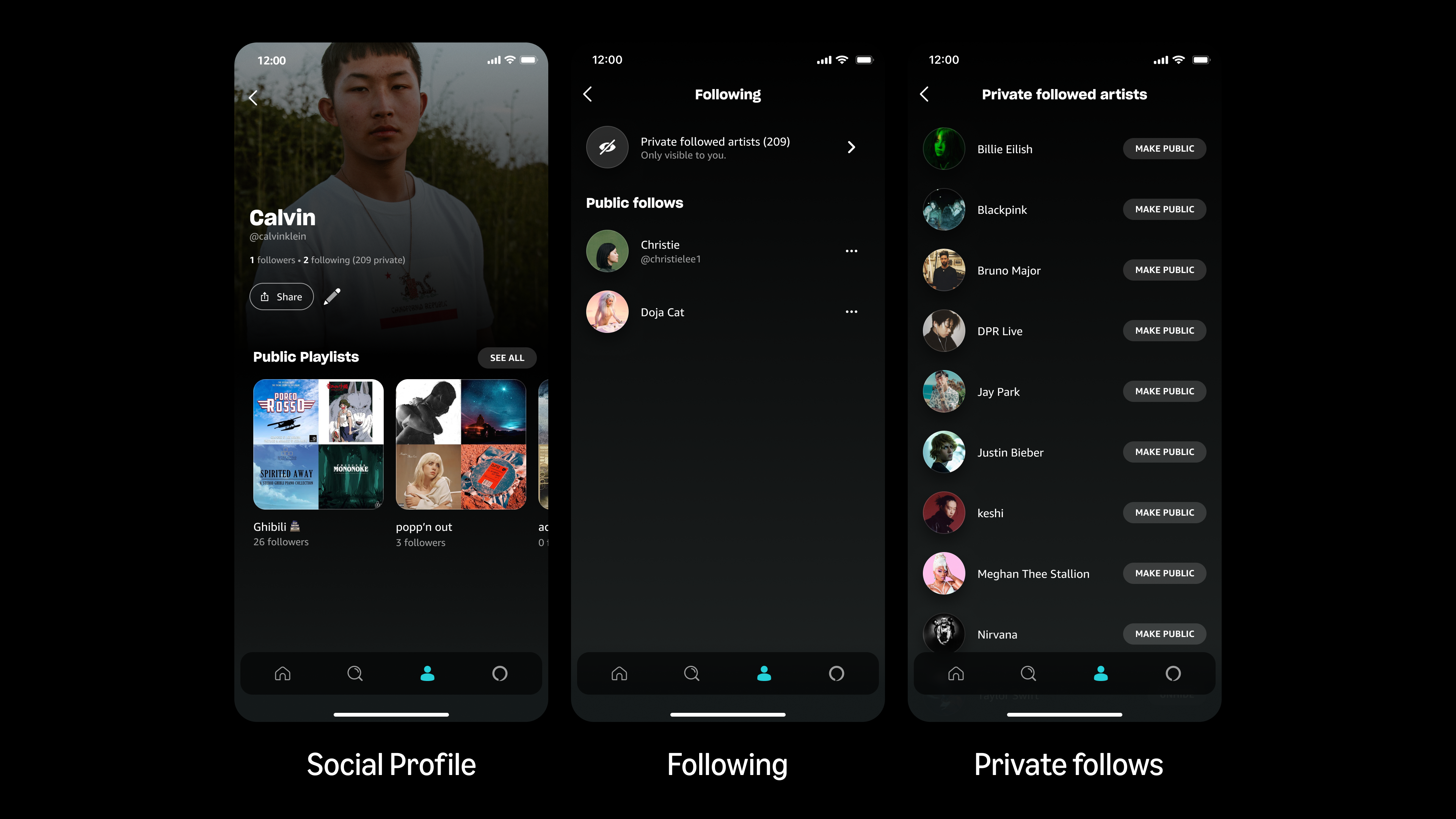
As we introduced likes and follows to better capture customer affinity, these signals were routed into the library alongside explicit saves. What was designed to improve personalization instead blurred intent, causing libraries to grow rapidly and unintentionally. The library shifted from a curated collection to an accumulation of signals—ultimately becoming unusable for customers.
Research Findings

Customers want an easy way to save to their libraries

Research revealed that customers weren’t seeking more controls—they wanted less. Customers did not distinguish between saving, liking, or following as separate actions. Their core need was simple: a fast, lightweight way to keep music they cared about and come back to it later. The heart was already understood as the fastest way to save music and express affinity in one action, reinforcing a desire for a single, intentional path to building their library.

Customers generated sweat equity with their content... No matter how it got there

Regardless of how content was saved—through albums, likes, follows, or legacy behaviors—customers viewed everything in their library as intentional and earned. Over time, they had curated collections that reflected listening history, emotional moments, and personal identity.

Research made it clear that this “sweat equity” mattered deeply. Any change that removed, reinterpreted, or reshaped saved content risked breaking trust. Preserving existing libraries wasn’t just a technical requirement—it was a customer promise. Moving forward meant simplifying the system without invalidating the effort customers had already put into building their collections.
Solution

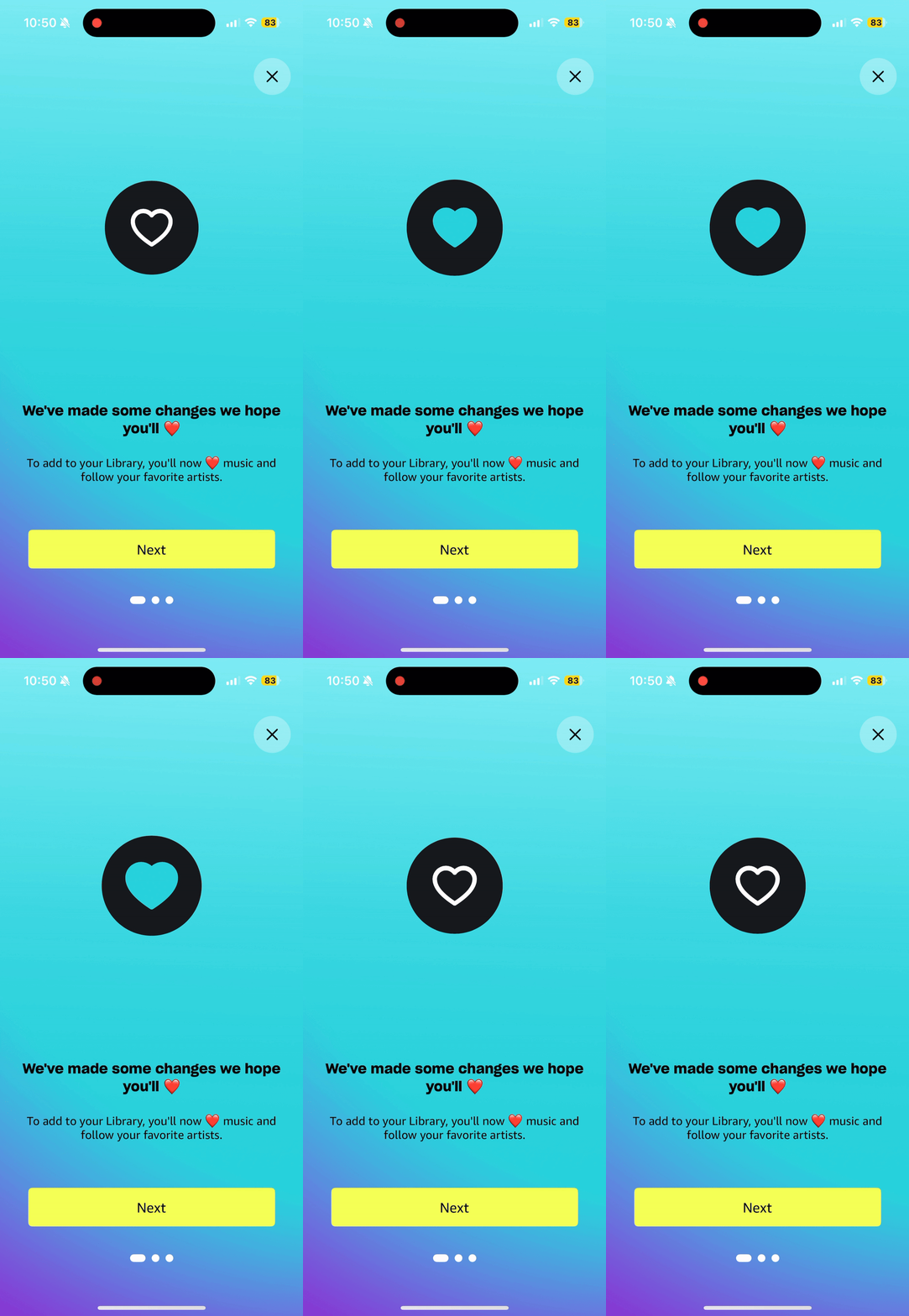
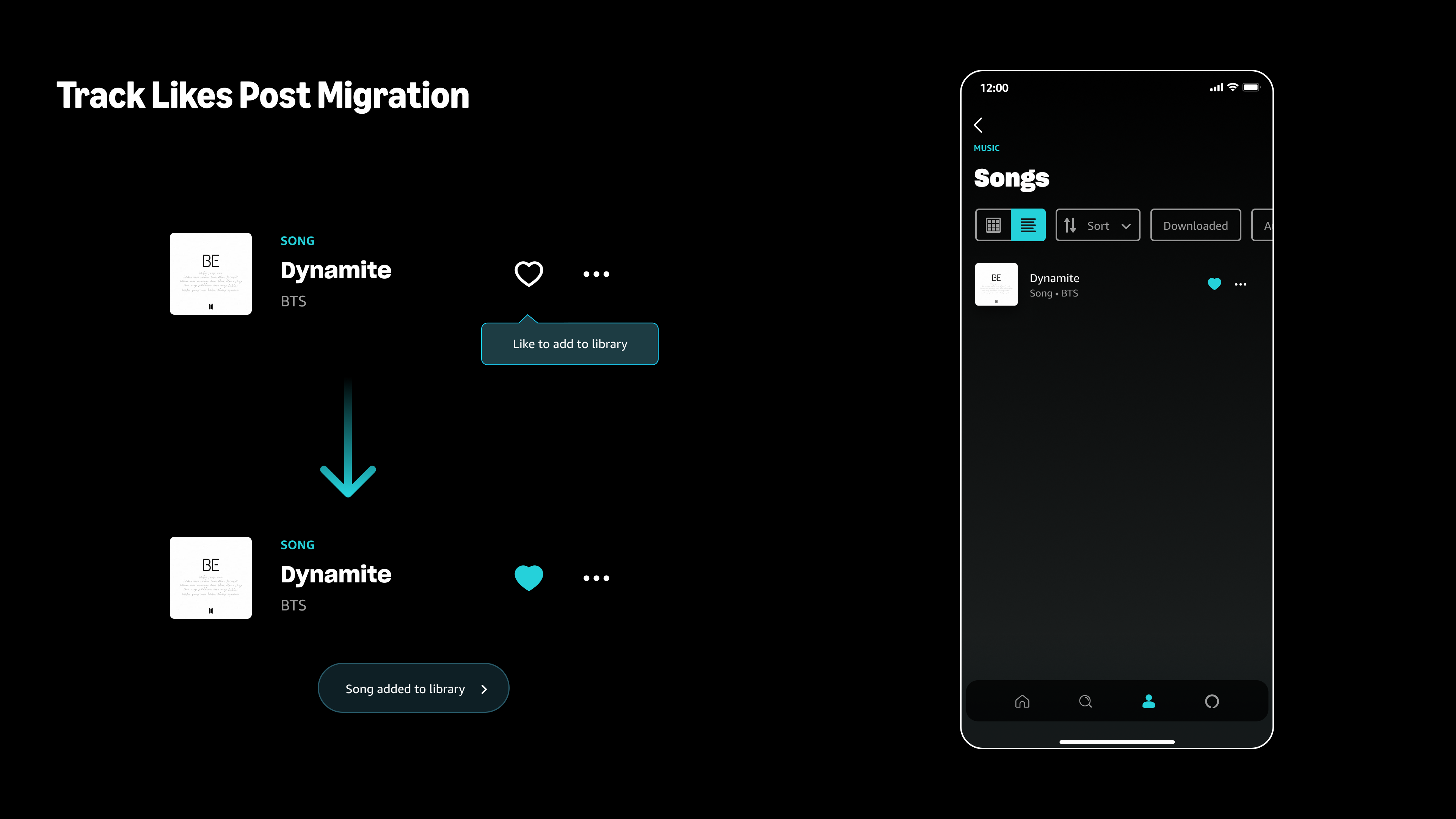
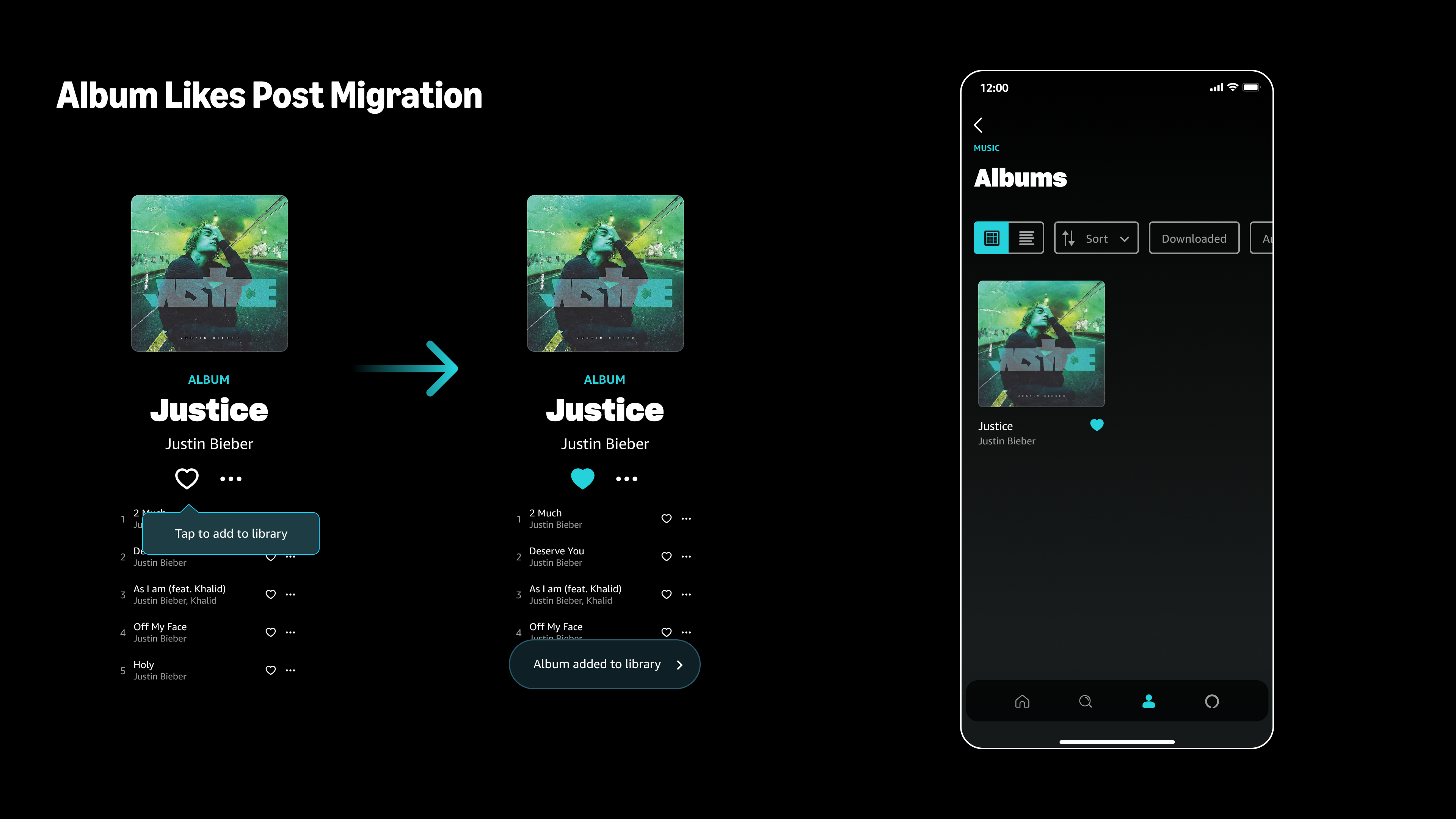
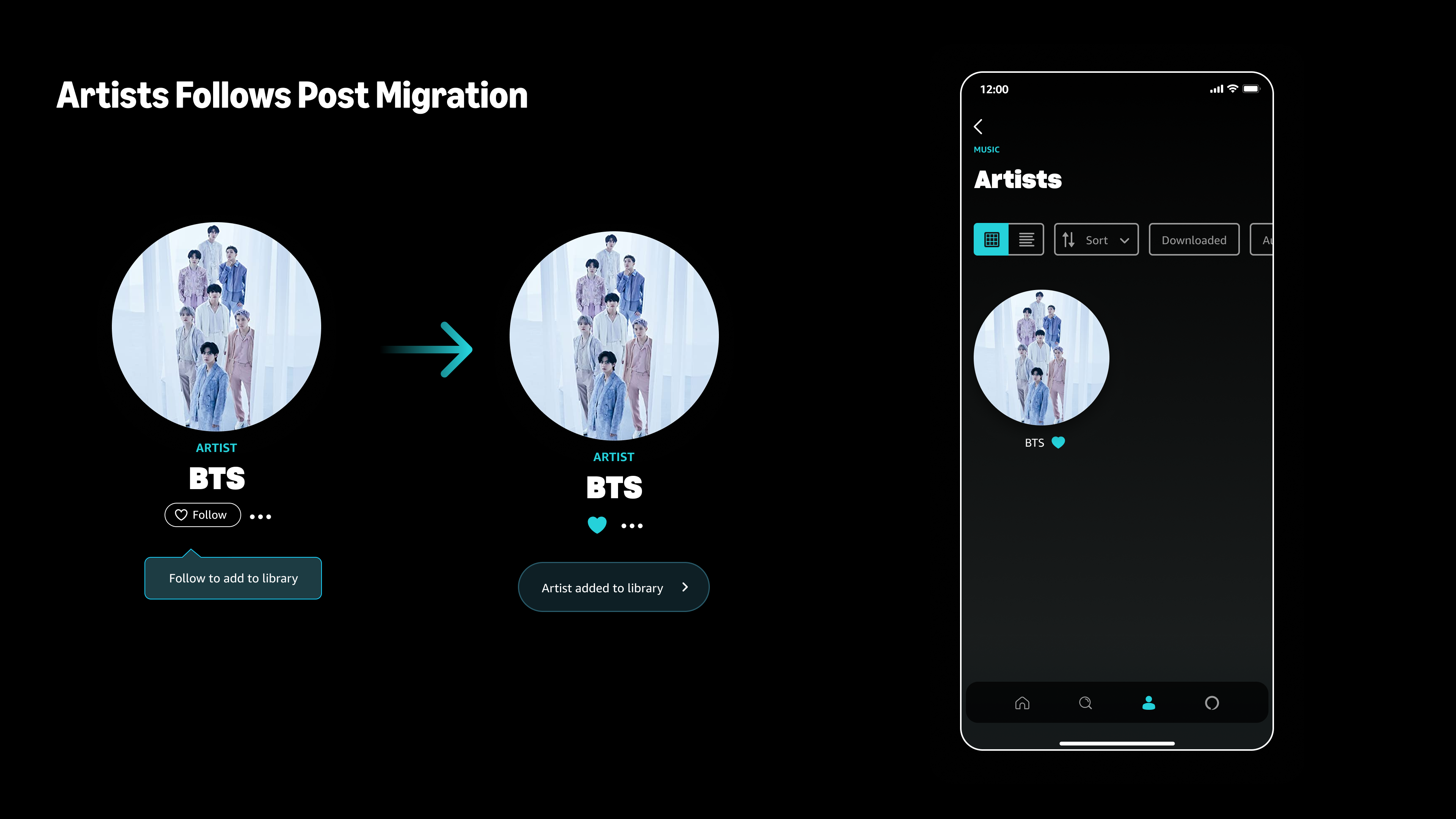
One clear action to save content to Library ❤️

I led the design to unify saving behaviors under a single, consistent Library model, streamlining how songs, albums, and artists are saved across Amazon Music. By simplifying interactions and clarifying outcomes, we reduced cognitive load, aligned the product with customer intent, and created a scalable foundation for future library features.

Moving forward: 
1. Liking is the new, single way of saving content to your library
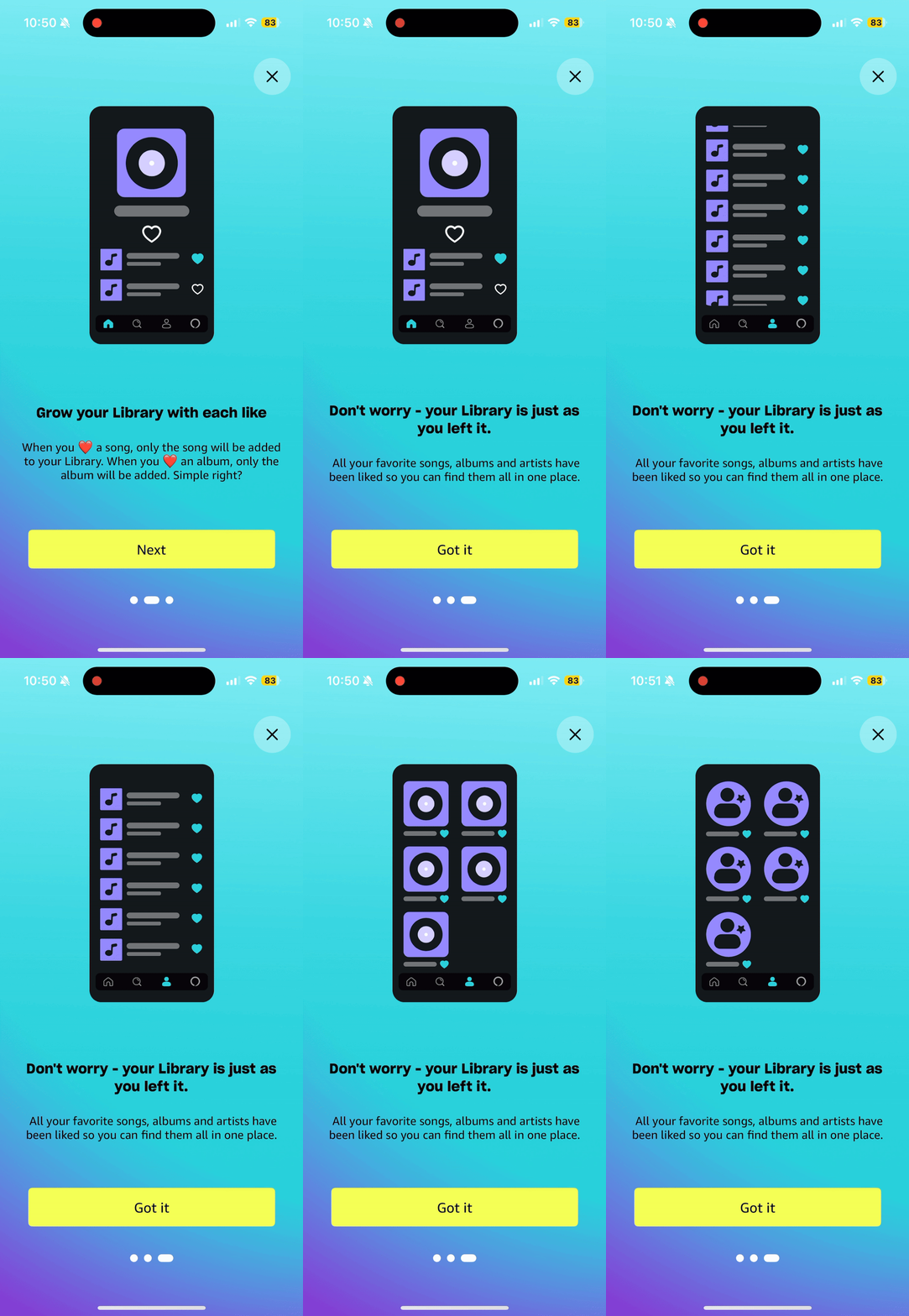
2. Liking will only like the entity
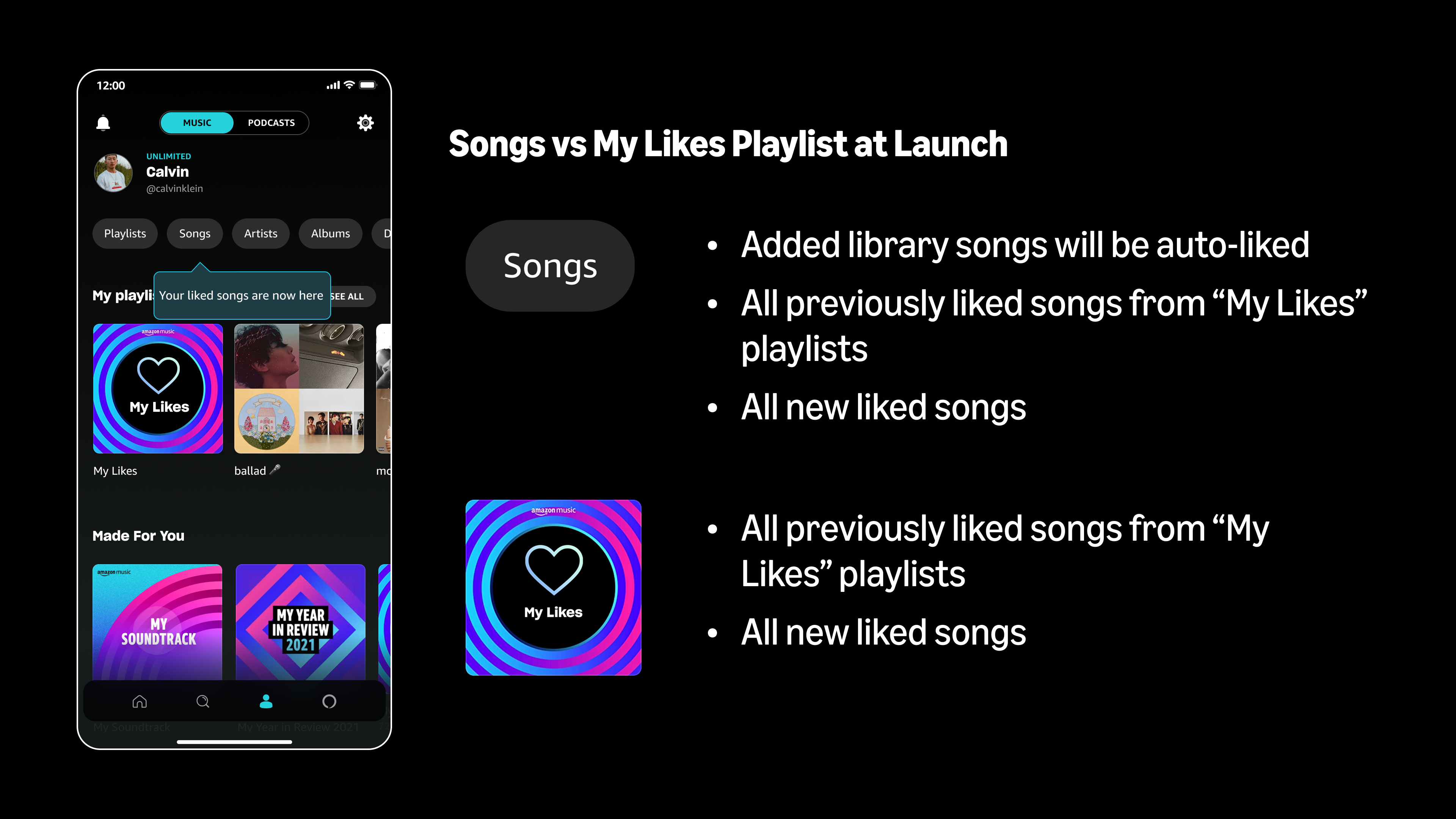
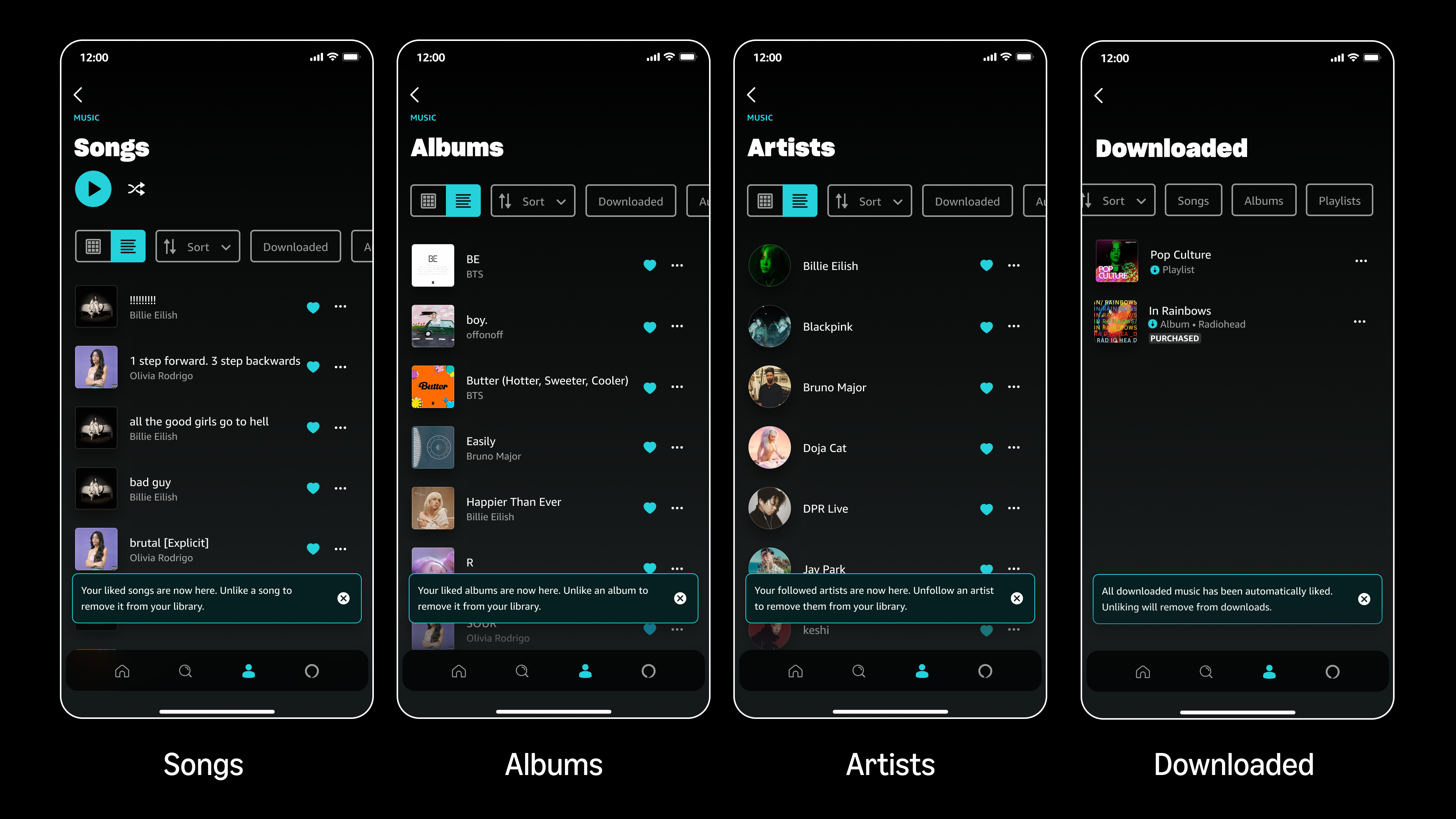
3. All previous content in your library will be retained by auto-liking
4. Handle personalization implications conservatively to minimize disruption

E2E Final Designs

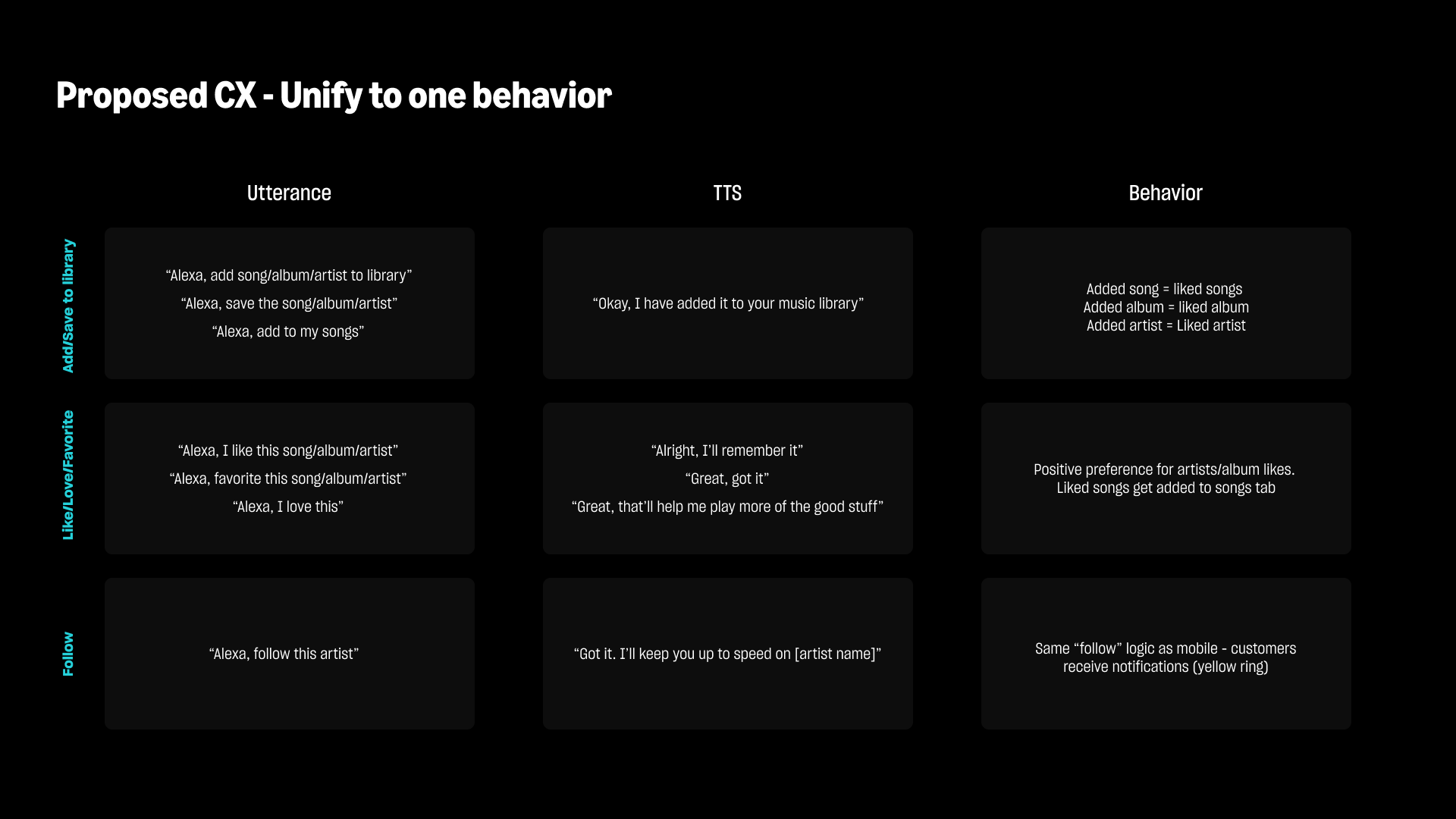
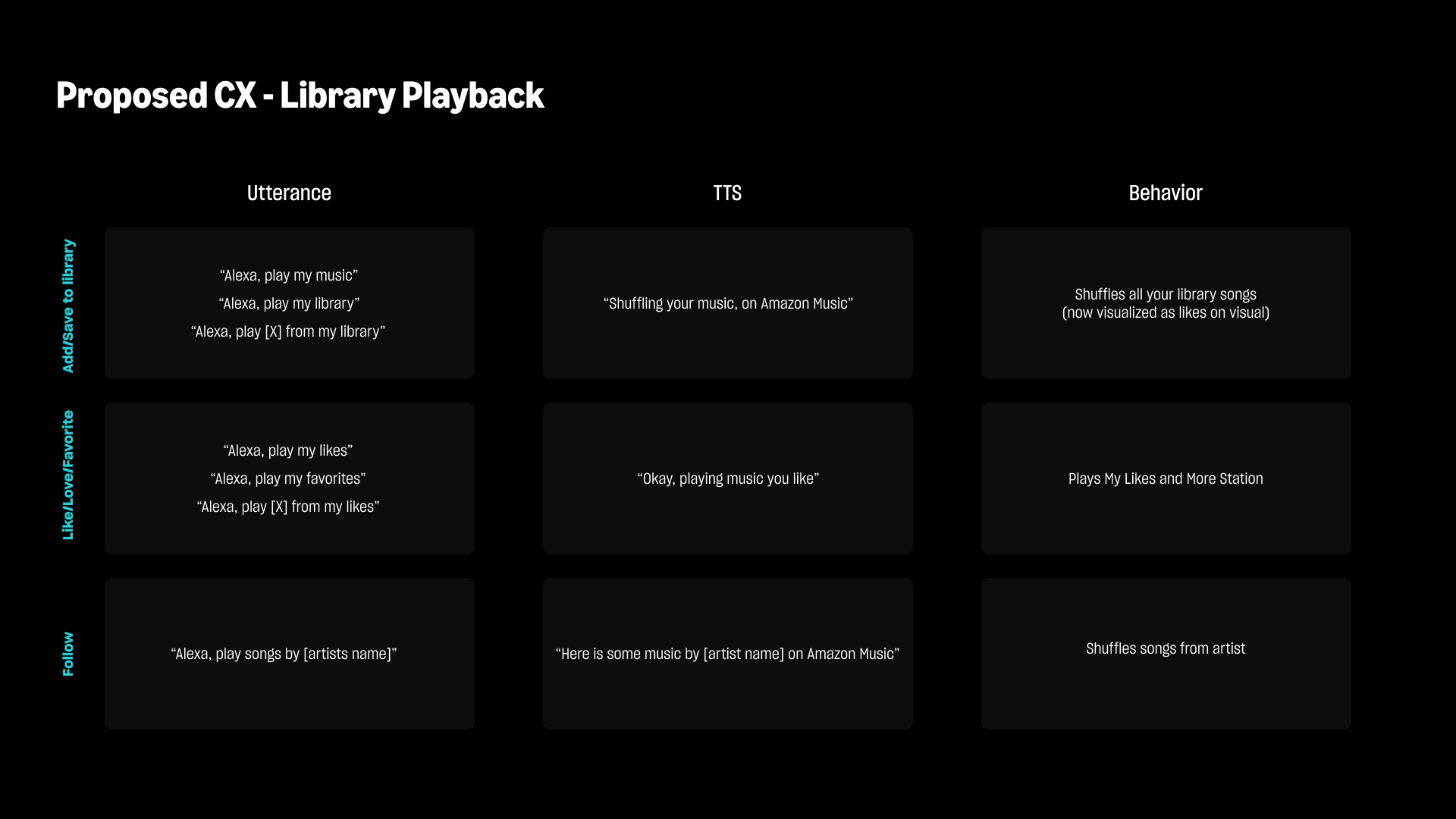
What about voice?

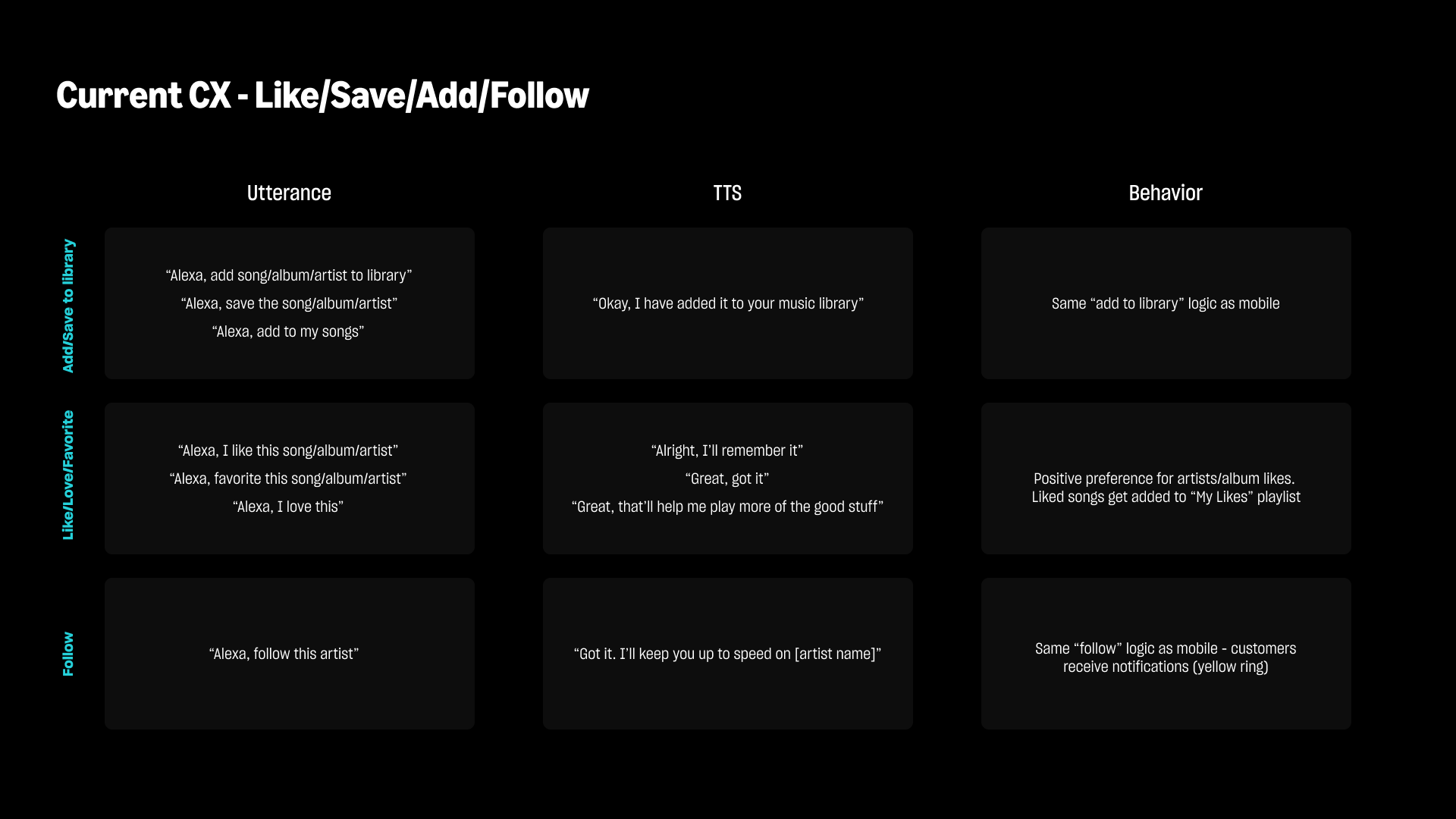
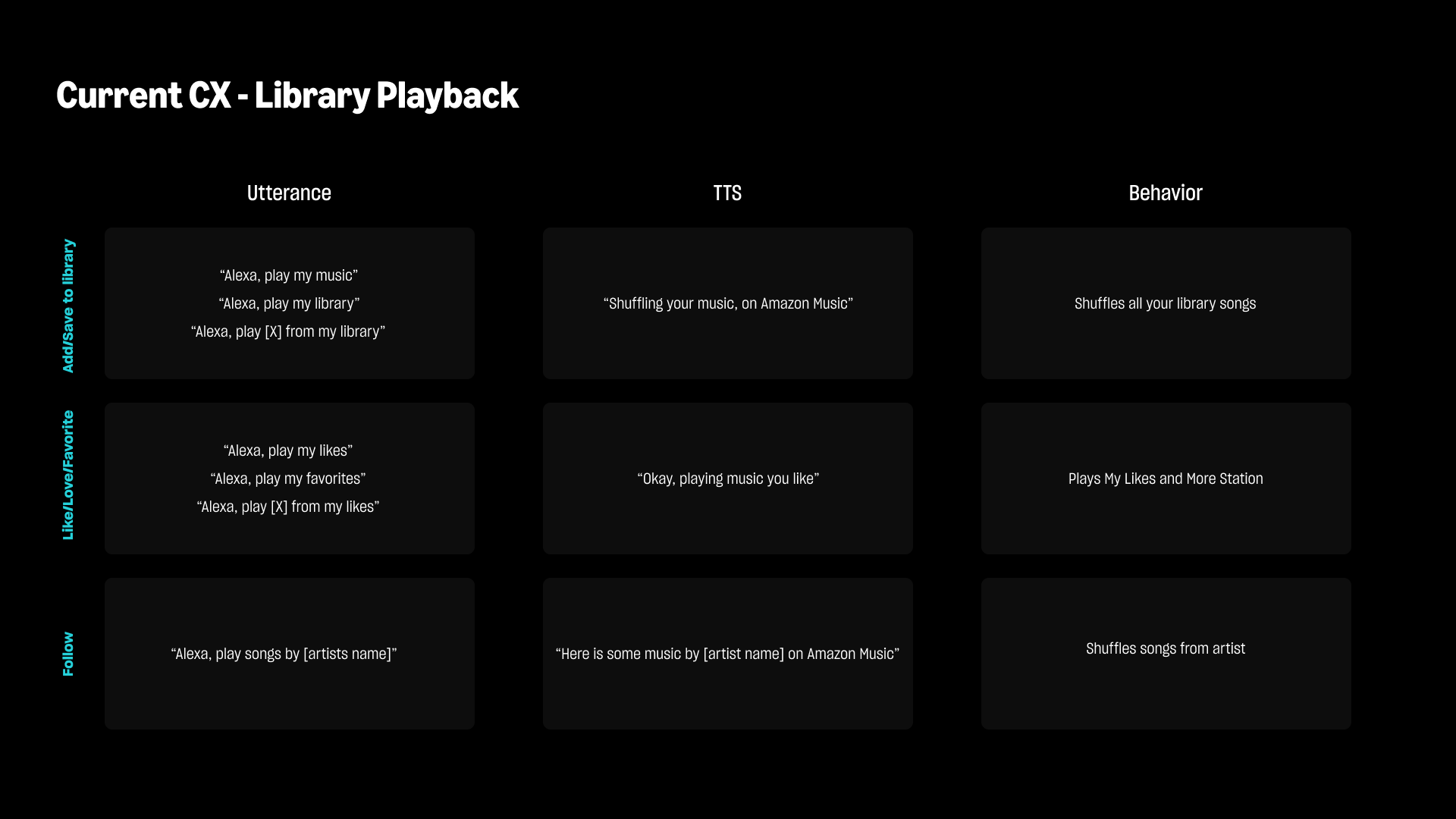
On voice surfaces, customers naturally used like utterances far more often than add to library commands. Liking a song was shorter, more conversational, and aligned with how customers expressed intent verbally. Importantly, this behavior required no coaching or education—it had already emerged organically.

This presented a unique opportunity: rather than retraining customers or introducing new mental models, we could adapt the system to meet existing behavior. By updating backend logic to treat likes as a first-class saving action, we could simplify the experience for voice customers while reinforcing a consistent, intuitive saving model across platforms.
© 2026, Made with lots of 🍵